AI chatbots and AI agents often get lumped together, but they do very different jobs.
A chatbot talks with people, while an agent can also take action for them.
The short answer: an AI chatbot answers questions in a conversation, while an AI agent works toward a goal by using tools and taking actions across your business systems. Chatbots are simpler and cheaper, and agents are more capable but need more setup and oversight.
Many businesses use both, with a chatbot handling the conversation and an agent doing the work behind it.
In this guide, we explain the difference between AI agents and chatbots in plain terms:
- How AI chatbots and AI agents work
- The main differences, with real business examples
- Which one is better for customer support and other tasks
- Costs, benefits and limitations
- When to use an agent instead of a chatbot, and how to use both together
Quick answer: AI chatbot vs AI agent
| Feature | AI chatbot | AI agent |
|---|---|---|
| Main job | Answer questions and guide people in a conversation | Complete a goal by taking actions |
| How it works | Reads a message and replies from its instructions and knowledge base | Plans steps, calls tools, checks results and decides what to do next |
| Tools and actions | Usually limited to replying, and sometimes booking or capturing details | Can read and update your CRM, email, spreadsheets and APIs |
| Autonomy | Low: it responds when someone writes | Higher: it decides its own next step within set limits |
| Typical examples | Website FAQ bot, support bot, lead capture bot | Lead research agent, CRM update agent, support agent that checks orders |
| Setup and cost | Faster and cheaper to set up | More setup, integrations and monitoring |
| Best for | Common questions and first-line support | Multi-step work that touches your systems |
Key takeaways
- Chatbot: talks with people and answers questions.
- AI agent: pursues a goal, uses tools and takes actions.
- Cost: agents usually cost more to build and run, because they make more decisions and connect to more systems.
- Customer support: a chatbot is enough for common questions, and an agent helps when it must look up or update data.
- Beyond questions: agents can automate tasks like lead qualification, CRM updates and email triage.
- Best practice: keep a human approving sensitive actions, whichever you choose.
- Together: a chatbot can handle the conversation while an agent does the work behind it.
What is the difference between an AI chatbot and an AI agent?
An AI chatbot responds to messages, while an AI agent works toward a goal and takes actions to reach it.
Ask a chatbot where your order is, and it can tell you if it has that information.
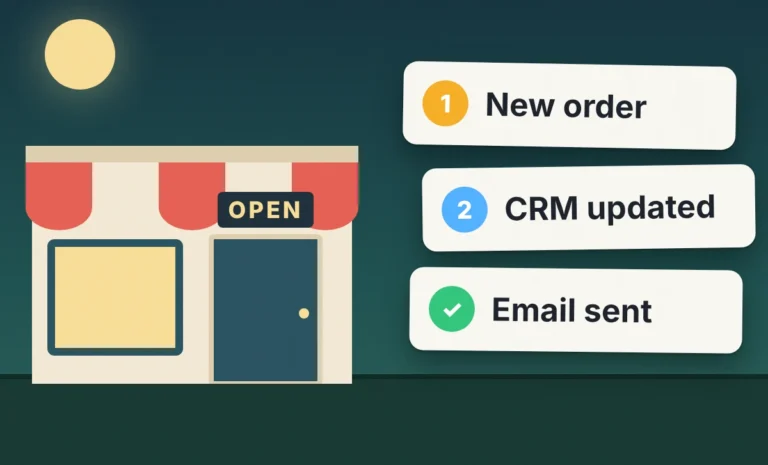
Give an agent the same goal, and it can look up the order in your system, check the shipping status and update the customer record.
The difference is action.
A chatbot is built around conversation, and an agent is built around getting something done.
The line is not always sharp, because a chatbot becomes more agent-like once you connect it to tools and let it act.
In short: chatbots talk, and agents act.
What is an AI chatbot, and how does it work?
An AI chatbot is a program that holds a conversation with people, usually in a chat window on your website, app or messaging channel.
Older chatbots follow scripts and menus, so they only handle the questions someone planned for.
Newer chatbots use a language model, which lets them understand free-form questions and reply in natural language.
Most business chatbots also use a knowledge base, such as your help center or product pages, so their answers match your information.
The flow is simple: a person writes a message, the chatbot finds the right answer and replies.
In short: a chatbot reads a message, finds an answer and replies.
What is an AI agent, and how do AI agents work?
An AI agent is software that uses a language model to decide what to do next, call tools and work toward a goal with limited supervision.
You give the agent a goal and a set of tools, such as your email, a spreadsheet, your CRM or an API.
It then works through the task in a loop:
- It reads the goal and decides the first step.
- It calls a tool, such as searching the web or looking up a record.
- It reads the result and decides what to do next.
- It repeats until the goal is done, then reports back or hands the task to a person.
A lead research agent, for example, might search the web, check your CRM, spot a gap and run another search without anyone telling it to.
We compare the platforms for building these in our guide to the best AI automation tools for AI agents.
In short: an agent plans, uses tools, checks results and keeps going until the job is done.
What are the main differences between AI agents and chatbots for business?
For a business, the biggest differences are what each one can do, how much it decides alone and how much risk and setup it brings.
- Goal: a chatbot answers, and an agent completes a task.
- Actions: a chatbot mostly replies, and an agent can change data in your systems.
- Decisions: a chatbot follows the conversation, and an agent chooses its own next step.
- Risk: a wrong chatbot answer is an error to correct, while a wrong agent action can change real records.
- Setup: a chatbot needs content and a chat interface, and an agent also needs integrations, limits and testing.
In short: an agent can do more, which means it needs more care.
What are some examples of AI chatbots and AI agents?
Chatbots handle conversations, and agents handle multi-step work behind the scenes.
Common chatbot examples:
- A website bot that answers questions about pricing, hours and services
- A support bot that explains shipping and return policies
- A lead capture bot that collects a visitor’s details and books a call
Common AI agent examples:
- A lead agent that researches a new contact, scores the lead and updates your CRM
- An inbox agent that sorts incoming email, drafts replies and creates tasks
- A reporting agent that pulls numbers from several tools into a weekly summary
- A support agent that checks order data, drafts a grounded reply and escalates unusual cases
In short: chatbots answer and guide, and agents research, update and report.
Which is better for customer support: an AI chatbot or an AI agent?
A chatbot is enough for common questions, and an agent is better when support needs to look things up or change data.
For frequently asked questions about hours, prices and policies, a chatbot is fast, cheap and available at any hour.
When a customer asks about a specific order, a refund request or an account change, the system needs to check and update real data, which is agent work.
Many teams combine the two, so the chatbot handles the conversation and an agent prepares the answer or the action.
Keep a person approving anything sensitive, such as refunds or account changes.
In short: chatbot for common questions, agent for requests that need data and actions, and a human for sensitive decisions.
Can AI agents automate business tasks beyond answering questions?
Yes, AI agents can automate multi-step business tasks that a chatbot cannot, as long as they have access to the right tools.
Examples include:
- Researching and scoring new leads
- Updating your CRM after a form submission or a call
- Sorting and drafting replies to incoming email
- Pulling data into spreadsheets and reports
- Preparing the next step in an onboarding or sales process
These tasks involve several steps and several apps, which is where agents earn their keep.
Reliable results still depend on clear limits, validated output and a human check on important actions.
In short: agents can run multi-step tasks across your tools, with guardrails.
What is the difference between an AI agent and an AI assistant?
An AI assistant mostly responds to your requests, while an AI agent is built to act on a goal more independently.
An assistant, such as a chat assistant or a voice assistant, waits for you to ask and then helps with that request.
An agent takes a goal, plans the steps and uses tools to complete them (see IBM’s comparison of AI agents and AI assistants).
A virtual assistant is usually a voice or chat helper that handles simple commands, like setting reminders or answering questions.
In practice, the terms overlap, and many products mix assistant and agent features.
In short: assistants respond to requests, and agents pursue goals.
Are AI agents more expensive than AI chatbots?
Yes, AI agents usually cost more than chatbots, because they take more work to build and make more decisions when they run.
A chatbot needs a knowledge base and a chat interface.
An agent also needs connections to your tools, rules for what it may do, testing and monitoring.
It often makes several model calls per task, which adds running costs.
Anthropic’s guidance on building agents notes that agents trade speed and cost for better results on complex tasks, so use one only when the task needs it (see Building effective agents).
Set spending limits, and use a simpler setup for simple jobs.
In short: agents cost more, so use them where the extra capability pays off.
What are the benefits and limitations of AI agents and chatbots?
- Chatbot benefits: quick to set up, low cost and available at any hour for common questions.
- Chatbot limitations: it mostly talks rather than acts, and a poorly grounded bot can give wrong or vague answers.
- Agent benefits: it completes multi-step work, saves staff time and connects your tools.
- Agent limitations: it needs more setup and monitoring, and a mistake can change real data.
Test either one on real questions and real data before you rely on it.
In short: chatbots are simple and cheap, and agents are powerful but need guardrails.
When should you use an AI agent instead of a chatbot?
Use an agent when the job involves several steps, needs data from your systems or ends with an action rather than an answer.
- The task spans several apps, such as your CRM, email and spreadsheets
- The result depends on looking up or updating live data
- The steps change depending on what the agent finds
- You want the work done, not just explained
If people mostly ask the same questions, a chatbot is the better and cheaper choice.
In short: agent for multi-step work, chatbot for common questions.
Can a business use AI chatbots and AI agents together?
Yes, and many businesses should, with the chatbot handling the conversation and the agent doing the work.
A customer asks a question in the chatbot.
If the answer needs data, the chatbot passes the request to an agent.
The agent checks your systems, prepares the answer or the action and sends it back.
The chatbot then replies in plain language, and a person approves anything sensitive.
In short: the chatbot is the front desk, and the agent is the back office.
Need help building a chatbot or an AI agent? Work with Algorithm Zero
Choosing between a chatbot and an agent is the easy part.
Connecting it to your tools, setting safe limits and keeping it working is where most projects stall.
At Algorithm Zero, we build and maintain chatbots and AI automations for small businesses, from lead qualification to CRM updates and support routing.
Browse our portfolio to see recent projects, then tell us what you want to automate, and we will recommend the right setup and build it with you.
Discuss Your AI Automation Project
So which one should you choose?
- Choose a chatbot if people mostly ask common questions and you want a fast, low-cost answer to them.
- Choose an AI agent if the work spans several steps and tools and needs to end with an action.
- Choose both if you want a friendly front end for customers and an agent doing the work behind it.
Many businesses start with a chatbot and add an agent once they see which tasks eat the most time.
If you are still unsure, pick one task, build the simplest version that works and let the results guide the next choice.
Frequently asked questions
What is the difference between an AI agent and a chatbot?
A chatbot answers questions in a conversation.
An AI agent works toward a goal by using tools and taking actions, such as updating your CRM or checking an order.
Which is better for a small business: an AI chatbot or an AI agent?
Start with a chatbot if your main need is answering common questions.
Add an agent when you want to automate multi-step work, such as lead qualification or CRM updates.
Are AI agents more expensive than chatbots?
Usually yes, because agents need more setup, more integrations and more monitoring, and they make more model calls per task.
Costs vary with the task and volume, so set limits and start small.
Can a chatbot become an AI agent?
Yes, when you connect it to tools and let it take actions, it starts to work like an agent.
The more it can do on its own, the more important limits and human approval become.
Can AI agents work without human oversight?
They can handle many steps alone, but important actions need a human check.
Validate their output, log what they change and keep a person approving sensitive decisions.
Can businesses use chatbots and AI agents together?
Yes, a chatbot can handle the conversation while an agent does the research or the update behind it.
This keeps the customer experience simple and the work reliable.